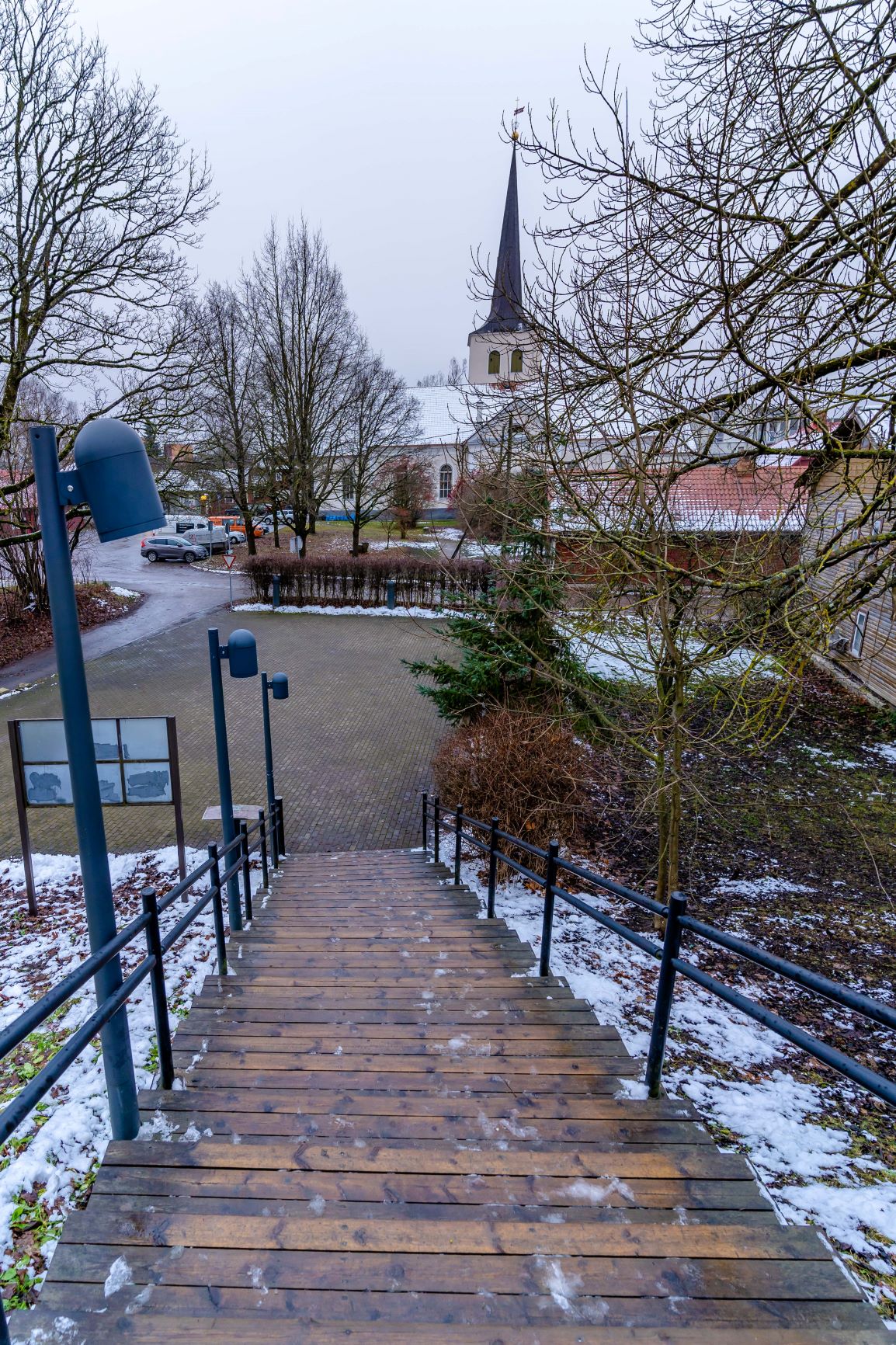
Paide, stories abound
“There is a lot to see and experience in Paide” – Ründo Mülts, Research Director of Järva County Museum
If you happen to be taking a city tour in Paide and chatting up colorful stories with young Ründo, then keep your pipe and glasses! Or take your mobile phone out of your pocket to capture all those detailed past events on video – when you return home, you will have the opportunity to relive the experience and think about Paide with a smile on your face.

Birthplace of Ita Ever and Arvo Pärt
Although Ründo is as old as Estonia, which has regained its independence, he sprinkles historical facts with such precision that he would have personally witnessed each event described. Ründo works as the research director of the Järvamaa Museum on a daily basis and does not have time to greet every visitor to the city personally. So, when you discover Paide on your own, look for the windows and doors of the old town houses Paide QR code for majalugude sticker – by scanning the code, you can learn about the exciting stories of the past and present that the city hides in its hundreds.
Paide is considered to have been born in 1265., when the Livonian Order’s landmaster Konrad von Mandern began building a fortress here and had the chronicler tell the world about it. The second Order fortress built in Estonia after Viljandi was built of limestone, which also gave the place its name – Wittenstein meant white stone in Low German. Today, the castle in the fortress’s rampart tower bears the same name. time center Wittenstein, where you can playfully travel through eight eras, including a stroll through the city during the Republic of Estonia, which was then officially called Paide. The Estonian name probably comes from the limestone that has been used extensively in city construction for centuries.
Even today, when walking around Paide, you will see a significant number of limestone sculptures. The latest additions to the cityscape – the Paide Symphony and the Paide Piano – are located in the courtyard of the world-famous composer from Paide. Arvo Pärt in the music garden established to recognize her. However, at least one sculpture is still missing from the city: a sculpture dedicated to the actress, who is equally beloved by Estonians as Pärt. Ita Ever, whose birthplace was located right next to the Order’s castle.


Herman Hesse and history
Paide first received city rights in 1291, but there are also colorful stories from later history about what the city did not receive. One of them was the broad-gauge railway, which the city fathers notably abandoned at the time; it was considered too noisy and disruptive for both the city’s residents and the livestock, whose milk yield was feared to decrease. The results of this landmark decision are still evident today – with the advent of the railway, Türi made a great leap forward in development, growing to become the second city in Järva County next to Paide, while the number of dairy cows in the county has been steadily increasing since the favorable decision at that time.
Paide had another rare opportunity – to become a university town in the 18th century, when the tsarist government was looking for a suitable place for it in Livonia. Unfortunately, Paide is said to have mentioned three important facts in comparison with Pärnu, Tartu and Jelgava: there is no previous history of an educational institution, firewood is more expensive than elsewhere and the climate is worse than its competitors. So the university was not built and the broad-gauge railway was voluntarily abandoned, but the townspeople were happy with the local beer from the G. Stamm brewery, the sweets named Presidendi from the H. Trantmann confectionery factory (in the current police station) were sweet, and tobacco for smoking a peace pipe was obtained from a local factory.
One of the most colorful people who lived in Paide and influenced the life of the city in the 19th century was a German doctor who came to Paide from Tartu to become a district or county doctor. Carl Hermann Hesse (1802-1896). His home has not survived, so you have to use your imagination to imagine it. The same was successfully done by Dr. Hesse’s grandson, the world-famous writer Herman Hesse, who never made it to Paide himself, but who, according to him, knew the city better than any other place he had visited many times, thanks to the detailed stories he heard from his father about the idyllic place in the middle of Estonia.